In Praise of Folly' was written in 1509 by Desiderius Erasmus, a humanist thinker and social commentator.
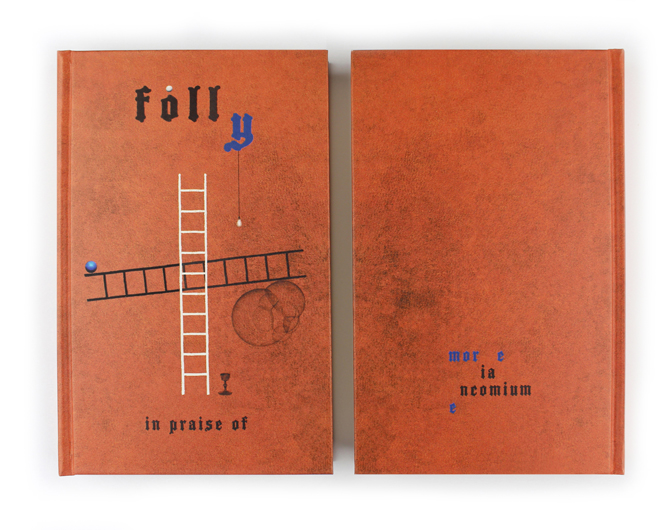
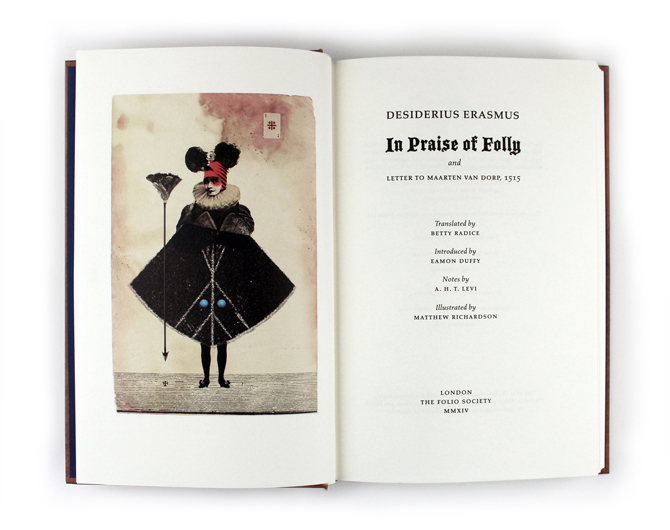
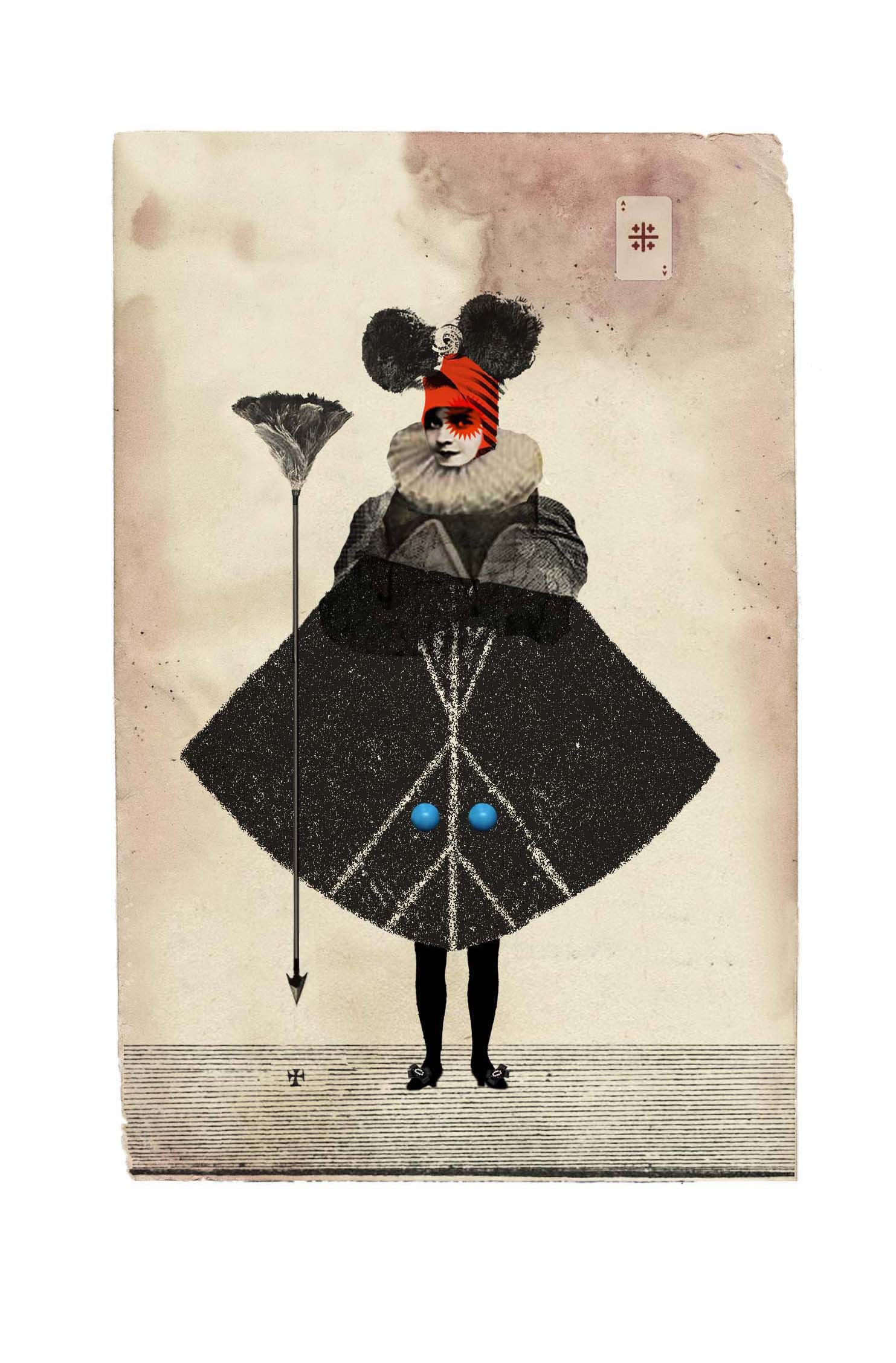
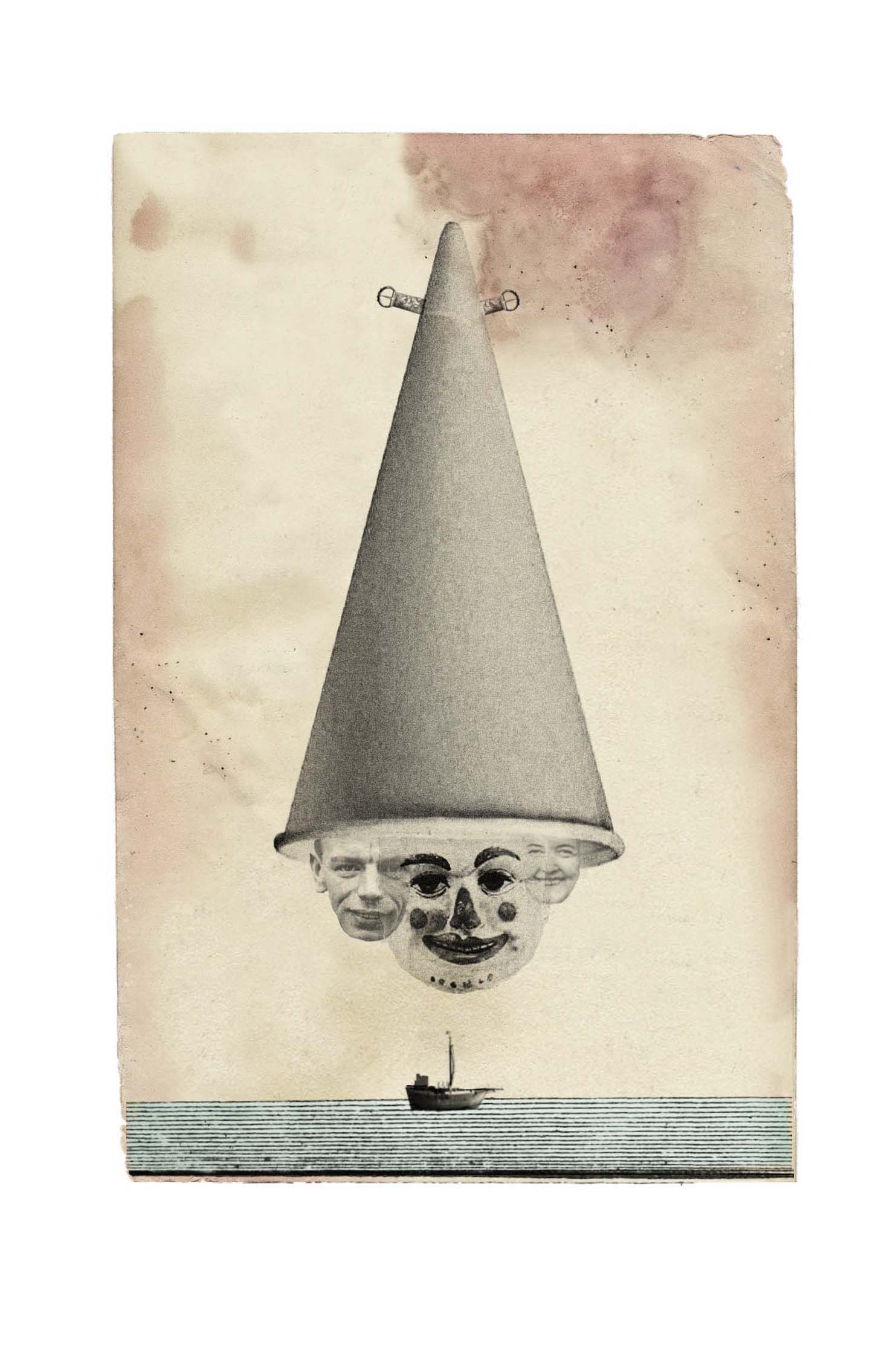
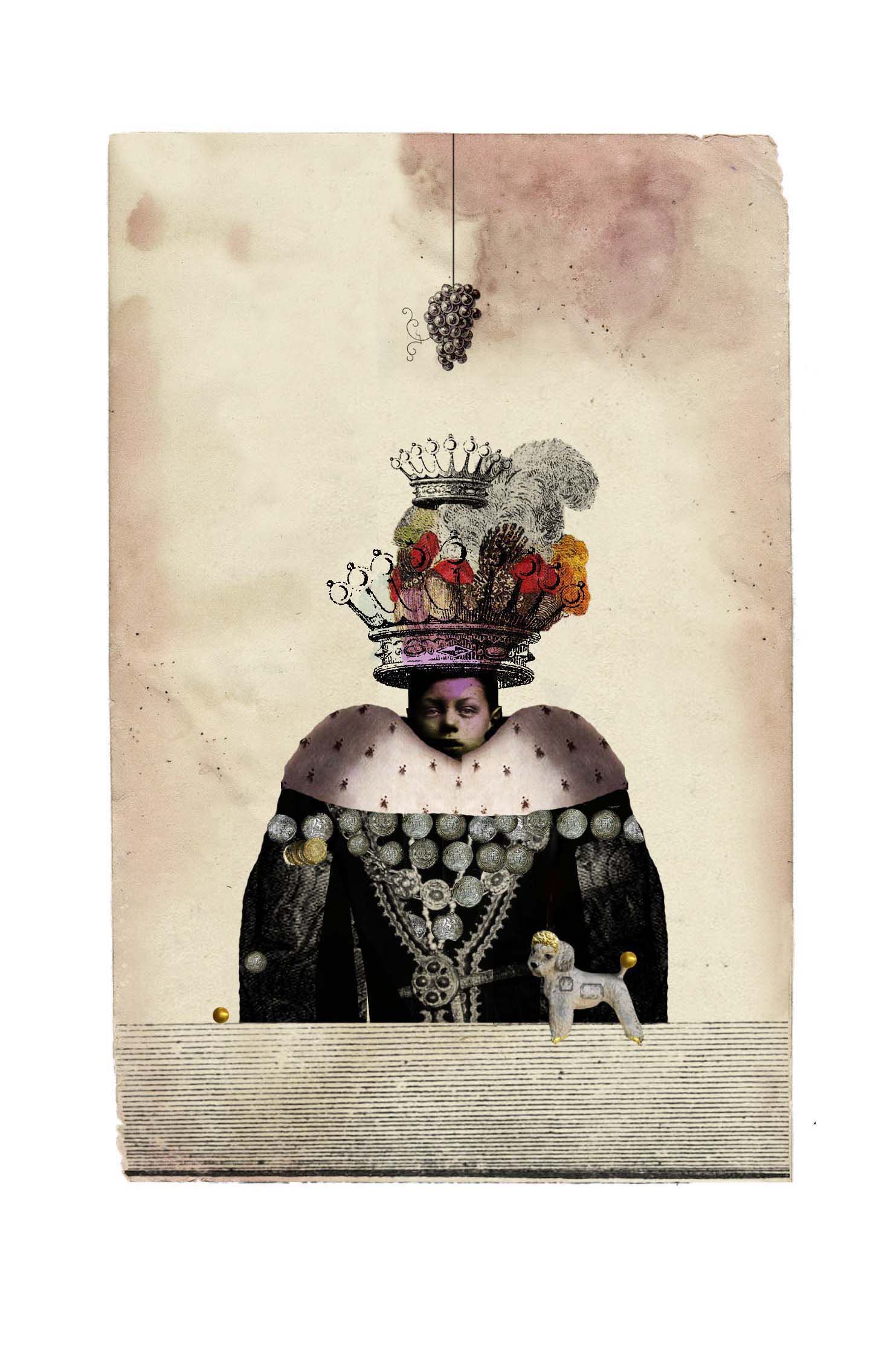
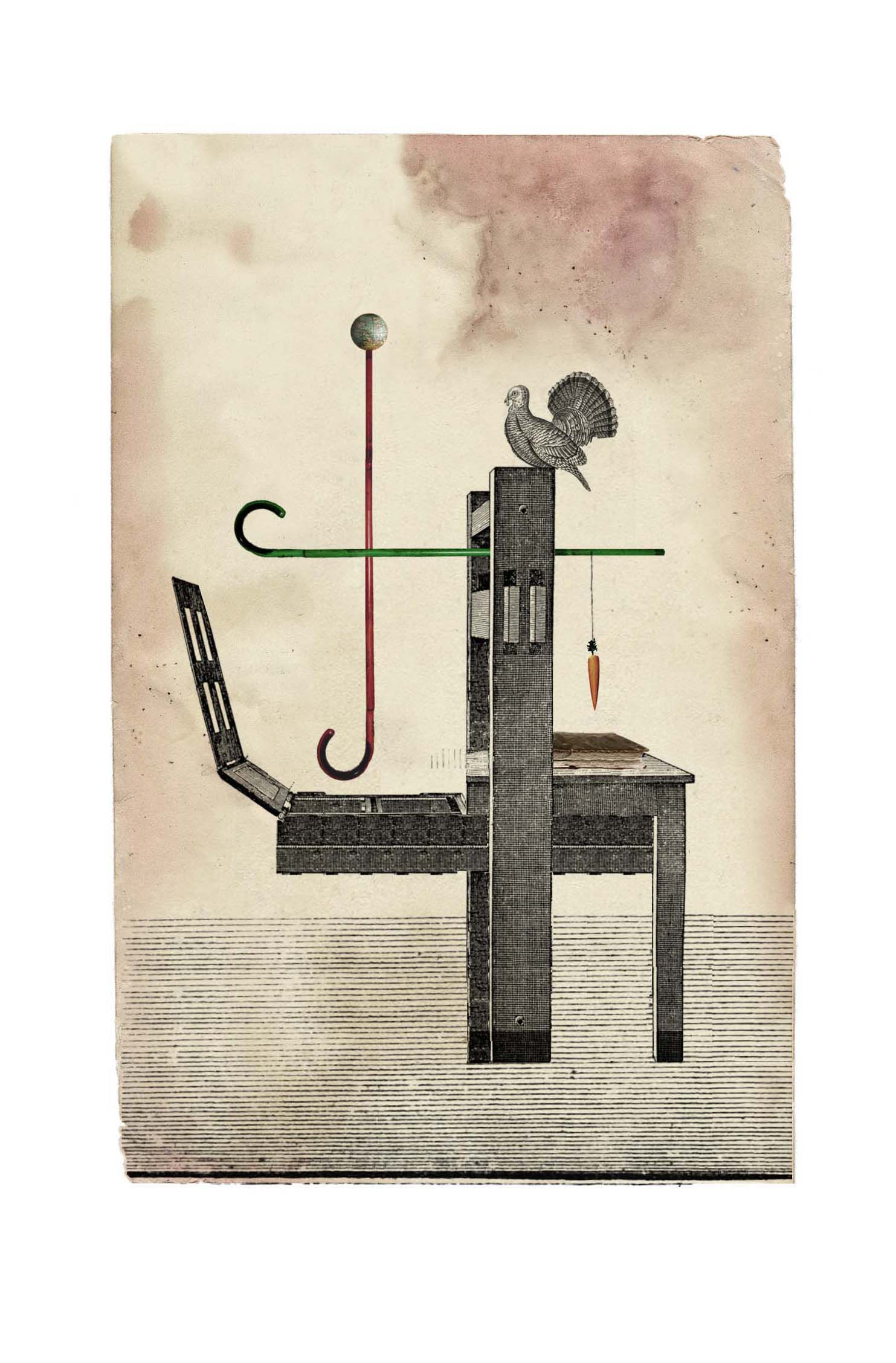
‘In Praise of Folly’ was first illustrated by Hans Holbein the Younger in 1512. Holbein’s prints were the basis for a series of new collages and acted as the ‘stages’. I removed the ‘action’ that Holbein had depicted and created my own – new actors performing on a much older stage. Erasmus’ writing is darkly humourous and uses rhetoric - puns, metaphor and allusions. Double or triple meanings occur throughout In Praise of Folly, and my visuals try to echo this aspect. In my images, the intention might be hidden, obvious, veiled or direct.
The character, ‘Folly’ swipes at every part of society, from teachers to priests, to dice-players and hermits through satire and foolery. I looked in different places for Folly and where she might be found. I looked across time and in different cultures, and especially at the discovery of truth through misrule, mockery and excess. I looked at the Fool, the Jester, commedia dell’arte, Pierrot, the Folies Bergère, the Mardi Gras carnival, and also more recent characters like Carmen Miranda, the Cat in the Hat and ‘jester punk’ Malcolm McLaren. Folly is all of these references.

Chapters:
Folly’s Family Tree
Folly of Fools
Folly of Superstition
Folly of Teachers
Folly of Intellectuals
Folly of Kings
Folly of Clergy
Erasmus Unmasked




Commissioned by Sheri Gee and published by Folio.
